
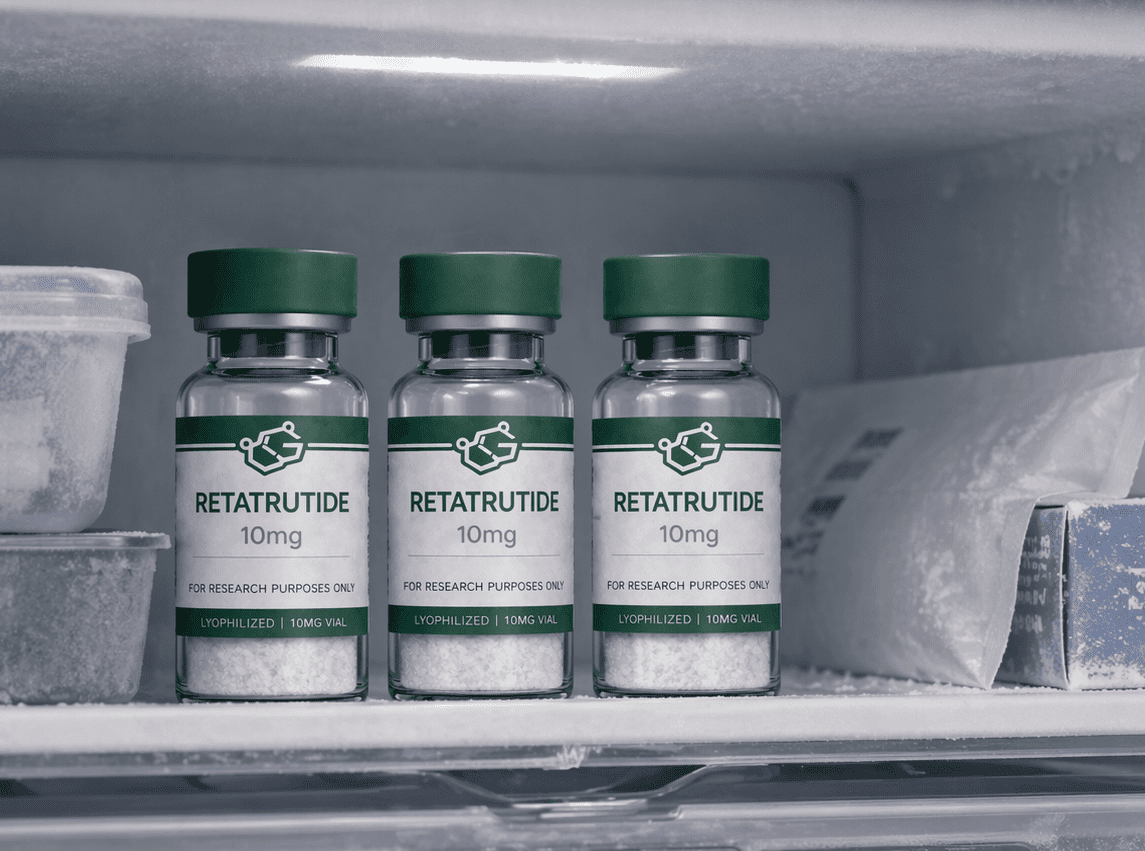
Proper Storage of Peptides: How to Maintain Stability and Potency

Introduction
Proper storage of peptides is critical for maintaining their stability, potency, and overall integrity. Peptides are sensitive compounds that can degrade when exposed to heat, light, moisture, or improper handling.
Understanding the proper storage of peptides ensures consistent results, extended shelf life, and reduced risk of degradation. This guide outlines best practices for storing both lyophilised and reconstituted peptides in controlled research environments.
What is the Proper Storage of Peptides?
The proper storage of peptides refers to maintaining controlled environmental conditions that preserve their chemical structure and effectiveness over time.
Peptides are typically stored in two forms:
- Lyophilised (freeze-dried) powder
- Reconstituted liquid solution
Each form requires different handling and storage conditions.
Why Correct Storage of Peptides Matters
Following the proper storage of peptides helps:
- Maintain molecular stability
- Prevent degradation
- Extend usability
- Ensure consistent research outcomes
Improper storage can result in:
- Reduced potency
- Structural breakdown
- Loss of reliability
Proper Storage of Lyophilised Peptides
Lyophilised peptides are more stable but still require careful storage. For more information from GenScript check here
Storage Guidelines for Lyophilised Peptides
- Store in a cool, dry environment
- Refrigerate at 2–8°C where possible
- Protect from direct light exposure
- Keep vials sealed to prevent moisture contamination
For extended storage, freezing may be used in controlled conditions.
Storage of Reconstituted Peptides
Reconstituted peptides are significantly more sensitive and require stricter control.
Storage Guidelines for Reconstituted Peptides
- Store refrigerated (2–8°C) at all times
- Avoid room temperature storage
- Minimise exposure to light
- Handle gently — do not shake
These conditions help preserve peptide stability after mixing.
Proper Storage of Peptides After Reconstitution
Once peptides are in liquid form, their degradation risk increases. For preparation guidance, see our how to reconstitute peptides step-by-step guide
To maintain stability:
- Store immediately after reconstitution
- Avoid repeated temperature changes
- Keep containers sealed when not in use
- Limit handling and exposure to air
Peptide Storage Best Practices
To follow correct storage of peptides effectively:
- Use sterile handling techniques
- Label all vials with date and contents
- Store consistently at stable temperatures
- Avoid unnecessary movement or agitation
Common Mistakes in Peptide Storage
Avoid these common errors:
- Leaving peptides at room temperature
- Exposure to sunlight or heat
- Frequent opening of vials
- Improper sealing
- Failure to refrigerate after reconstitution
Conclusion
Correct storage of peptides is essential for preserving their stability, potency, and reliability. By following structured storage practices for both lyophilised and reconstituted peptides, you can minimise degradation and maintain consistent research outcomes.